our interconnected world
The Suffragettes, Writing, & Palestine

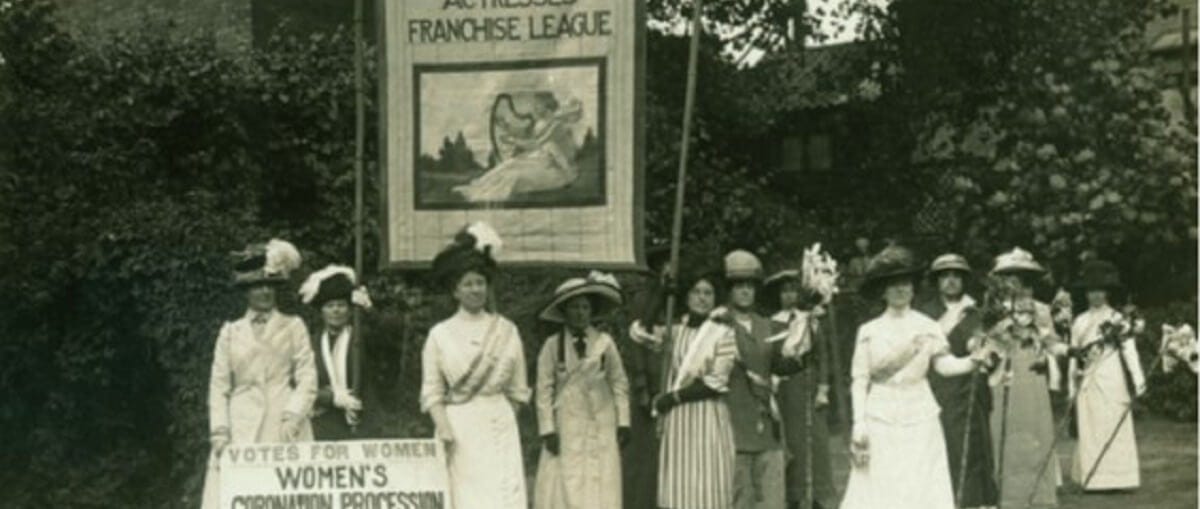
So I’m researching for the big project. My creative process usually ebbs and flows like that. I have a few weeks of real writing, where I’m actually adding to the word count. Then I’ll have a few weeks of research, filling in the history and world-building. It’s nice to have both, but sometimes, the research can be a really distracting rabbit hole.
Recently, I have been reading up on the Suffragettes. Okay. Now. I'm going to say something which might make me sound very ignorant. Truthfully, and I blame this on my obsession with period piece adaptations, I had wrongly assumed that women’s political power was mostly fought in sparks of domestic feminism until it lit a national movement. What I’m trying to say is, I erased the true violence of women’s rights out of my mind. I had somehow sanitised the fight into a domestic movement of strong-willed heroines who still married right. Forgetting that in reality, generations of women had fought for it, brutally, painfully, and slowly. The rights I so easily take for granted today: a career, freedom, a bank account(!), etc., exist because of protest, rebellion and hard-won battles.
I mean, the sheer violence of the Suffrage movement is astounding. They died in prisons on hunger strikes, in acts of arson, in protests, on racetracks. They forced the government to enact legislation to stop their movement, and they encouraged each other to destroy property. These movements were so extreme for something we believe to be so fundamental. I honestly couldn’t believe how much the British Government allowed them to suffer and still did not grant them suffrage. Like, was it that deep? How could a world where women were force-fed in prison be better than a world where they had the vote? How could a government be so against something so obviously right that they created such high levels of disruption? The worst part is that this is still a reality today.
We live in what I consider an apathetic world. We see genocide play out on our screens daily, we know our freedoms are slowly being chipped away in the cost of living, the ruination of the NHS, the normalisation of right-wing ideology. Yet, it still takes a lot for us to mobilise. These women, these Suffragettes, rebelled at great risk. Many died for their commitment to their cause, for their sheer audacity in wanting to carve out a world better for every woman after them. We herald them as such heroes, especially in the west, but at the time, they were terrorists, nuisances, and disruptive. All the words I’ve heard describe protest today.
Protest is still sold to us as inconvenient, attention-seeking, divisive, without realising it is meant to be all these things. Yes, it’s inconvenient because we live in a culture of convenience, and people only pay attention when their lives are disrupted. Yes, it’s attention-seeking because we are looking away, we are being misled, we are not seeing the true implications of our apathy. And yes, it’s divisive because keeping the peace with fascists, racists, and imperialists only allows for it to spread. I don’t want to act like nothing is happening; I want to free Palestine.
Understanding my reasons for protest makes me understand the Suffragettes better. These women dared to dream and fight for a world better than the one they inherited. Our fight for Palestine, Sudan, Congo, against Fascism, for those disadvantaged, all exist in the same dream. We protest because we believe in the possibility of a better future. Because we’ve learnt from history that it is possible. Because we owe it to those who deserve a better future.
On the 19th of July, I attended another National March for Palestine, and on the route, they had a sign warning us that certain affiliations, certain chants are now considered illegal. The establishment’s response to peaceful protest has been marked by fear. They are afraid. They are afraid that we have not forgotten, we have not allowed ourselves to be desensitised to crimes against humanity, and we are not afraid of them. They are afraid that if we continue to fight and not forget, we’ll grow tired of their apathy. They are afraid we’ll hit them where it hurts, just like the Suffragettes. Emmeline Pankhurst said herself, they care more for property than they do people. What has changed today?
Protest is not a spark of a moment; it is entrenched in a tapestry of history. It is the only way we, the people, become the initiators. We know they are afraid because they criminalise the very act of protesting. They spend millions on policing us. They publish arrest numbers and figures on the cost of protest. They tell others it’s pointless, rude, inconvenient, dangerous, niave to divide and discourage us.
They called the Suffragettes terrorists, too. Now we sit here wondering how it could have ever gotten so bad that the women had to starve themselves, and the government still didn’t give them the vote.
Amazing piece as always sis!